Overview
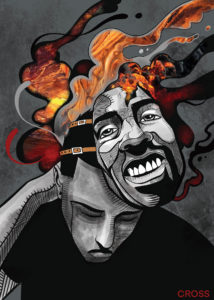
Bullets and Bandaids is a collaborative storytelling project that brings together veterans, writers, and artists to create work based on real human experiences. Each piece begins with a story, is shaped into a written narrative, and is then interpreted visually by an artist.
Our mission is to use storytelling and art to bridge the divide between veterans and civilians by focusing on the individual human experience.
The project began through a series of early exhibitions in 2012 and 2016. Bullets and Bandaids formally established as a nonprofit organization in 2019.
Bullets and Bandaids was founded by Marine Corps veteran Robert LeHeup. The project grew out of a desire to create a space where veterans could share their experiences in a way that felt human, honest, and free from expectation or exploitation—while also allowing others to engage with those stories beyond surface-level understanding.
Yes. Bullets and Bandaids is a registered 501(c)(3) nonprofit organization.
Bullets and Bandaids is based in Columbia, South Carolina, with work and collaborators extending across the United States and internationally.
Bullets and Bandaids is a growing body of work, with plans to expand the model to reach more participants and communities over time.
Most veteran organizations focus on services, advocacy, or policy.
Bullets and Bandaids reinforces the dignity of individual lived experiences by allowing stories to be carried forward through writing and art, rather than reduced to assumptions, politics, or stereotypes.
For veterans, that means being seen beyond assumptions or labels.
For supporters, it means directly helping create and share stories that continue to reach people.
We are not trying to speak for veterans.
We are creating space for people to encounter them as fully realized human beings.
No. Although most of our interviewees are veterans, the work itself is not limited to military experiences. It reflects a wide range of human perspectives and themes that extend beyond service. We do this to reinforce the shared human experiences that make meaningful dialogue possible.
Bullets and Bandaids is rooted in working with American combat veterans. That foundation comes from lived experience, access, and a commitment to telling stories with accuracy and care.
At the same time, the work is not limited to combat or even to military service. As the project grows, it includes a broader range of voices, including non-combat veterans and civilians, when those stories align with the intent of the work.
The focus is not on category.
It’s on the individual human experience.
There is no set type of story. Participants have shared experiences related to identity, humor, trauma, relationships, culture, loss, growth, and everyday life. Human dignity is not determined by spectacle.
We don’t restrict subject matter. Our interviewees are free to share what they feel is important. The only expectation is that the resulting work does not intentionally promote harm or degrade groups of people.
Participants come through outreach, referrals, and direct interest. We look for individuals who are willing to engage honestly with the process, rather than fitting a specific background or narrative.
If you’re unsure whether your story fits here, it probably does.
Process / How It Works
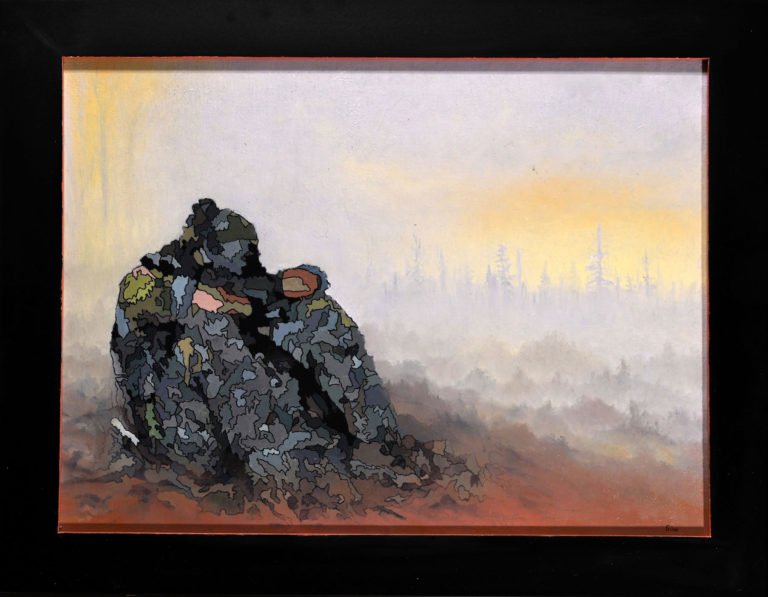
Each piece follows a three-part collaboration: a participant shares their story in an interview, a writer shapes that into a narrative, and an artist interprets the written piece through their own medium. The final work is then presented through exhibitions, publications, and digital platforms.
The interview is not about extracting information.
It is about creating enough trust and respect for someone to speak honestly on their own terms.
Members of the Bullets and Bandaids team, or trusted collaborators who understand the project’s intent and how to guide a conversation without forcing it, conduct the interviews.
Writers are chosen based on their ability to engage with the tone and substance of a story. Pairings are made intentionally, based on voice, subject matter, writers’ and artists’ availability, and what we believe will create the strongest narrative outcome or a poignant connection.
Artists are selected based on their body of work, their approach to interpretation, and how their visual language might engage with a particular story. We work across a wide range of mediums and styles.
No. Pairings are made by the Bullets and Bandaids team. This allows for unexpected and meaningful interpretations that might not happen through direct selection.
Writers and artists are given full creative freedom, with the expectation that they remain true to the story while preserving the dignity of the participant.. The goal is interpretation, not replication.
Writers work directly from recorded interviews and aim to preserve the tone, intent, and core of what was shared. Participants are given the opportunity to review the written piece before it moves forward.
Yes. Participants review the written narrative and can provide feedback before it is finalized and passed on to the artist.
Timelines can vary depending on scheduling and production, but most pieces take several months or more from interview to final artwork. We don’t want to sacrifice quality and dignity because we’re in a rush.
Once completed, the work becomes part of the Bullets and Bandaids collection. It may be included in exhibitions, publications, and digital formats, allowing it to be experienced by a broader audience.
Most pieces include a recorded voiceover of the story, which is accessible through QR codes in exhibitions and on digital platforms. This adds another layer to how the work can be experienced.
Each piece is typically presented alongside its museum label, with information on the artwork (Title/Artist/Medium), a summary of the written work, the writer, and the subject’s name. There is also a QR code that leads to a webpage with the full written narrative, optional access to the voiceover, the writer/artist statement, and information on how to contact or follow them on social media. The exhibitions are designed to be immersive, allowing audiences to engage with both the visual and narrative elements.
Participants can withdraw their story before the written narrative is finalized. However, once the work has been completed, or if we have reached out and have not received a response, the subject’s name will instead be listed as “Anonymous.”
Every piece follows the same structure. No two outcomes are the same.
Exhibitions & Events
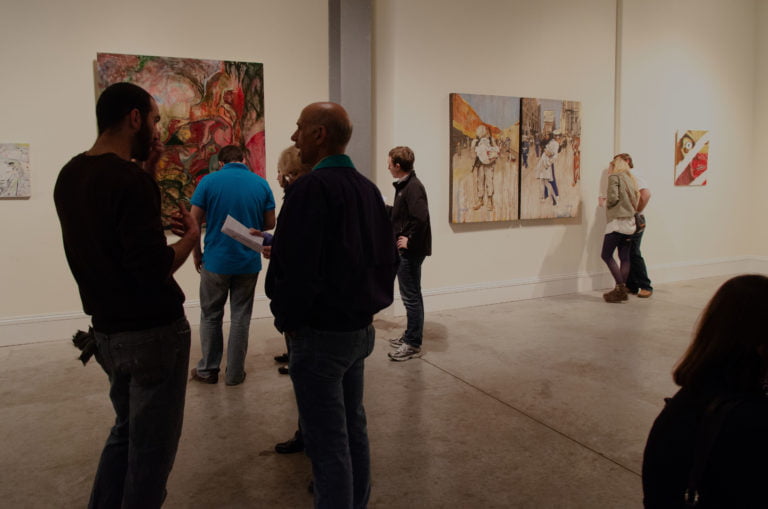
Bullets and Bandaids has exhibited in events, galleries, and public institutions, including the Columbia Museum of Art, the Ringling College of Art and Design, and the Richland County Main Library. Collectively, the work has reached over 60,000 viewers.
Our work is presented through traveling exhibitions. You can view upcoming opportunities on our website or follow us for announcements on future exhibitions and events.
Yes. We are continually developing new exhibition opportunities as part of our ongoing work, including those tied to our latest volume, Patterns Repeat. Updates are shared through our website and mailing list.
Each exhibition presents the artwork alongside its corresponding written narrative. Viewers can engage with the work visually, read a short blurb of the story, and access a QR code that provides the full story, as well as a voiceover and further information on the writer and artist. The layout is designed to encourage slower, more personal engagement.
We describe our exhibitions as immersive rather than interactive. The work invites reflection and engagement without requiring the viewer to participate or follow directions.
Yes. We often pair exhibitions with panel discussions, talks, or programming that bring together veterans/civilians, writers, and artists to speak about the work and the process behind it.
Yes. We welcome conversations with galleries, institutions, and organizations interested in hosting an exhibition. We approach each opportunity collaboratively to ensure the work fits the space and audience.
Requirements vary depending on the size and scope of the exhibition. In general, hosts should be able to provide appropriate space, support for installation, and alignment with the intent of the work. We work closely with each host to determine logistics.
Yes. We are open to both national and international exhibition opportunities and have worked with participants and collaborators from across the world.
The best partnerships don’t force alignment. They reveal it.
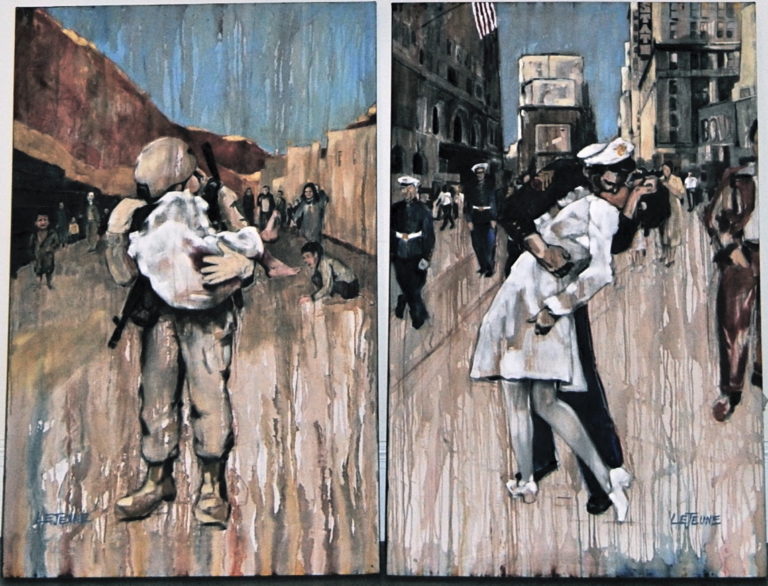
For Veteran Participants
Anyone who has served in the military is eligible to participate. There is no requirement tied to branch, role, or length of service. Our only obstacle is ensuring our staff can handle the workload, so you may be put on a waiting list.
No. We work with veterans from all backgrounds, including those who did not serve in combat roles. Every experience has value.
If it matters to you, it matters here. There is no expectation for your story to be dramatic or extraordinary. Some of the most impactful pieces come from everyday experiences.
Yes. You can request that your name be withheld or changed, though we would need to know that before the interview is conducted, and we would still retain the video of your interview. We will take reasonable steps to protect your identity, though complete anonymity cannot always be guaranteed in public or digital formats.
No. You are never required to share anything you’re not comfortable with. You can talk about whatever you choose—your story is yours to define.
Interviews are typically conversational and can range from about 30 minutes to a few hours, depending on what you want to share. There is no set script or time requirement.
Participation is voluntary and typically not compensated, unless otherwise agreed upon in advance.
Your story is shaped into a written narrative, then interpreted by an artist. The final work may be included in exhibitions, publications, and digital platforms as part of the Bullets and Bandaids collection.
Yes. Participants are able to access the final written piece, as well as a high-resolution print on canvas of one piece of your choice from our collection.
Yes. You are free to share your story. Bullets and Bandaids retains the right to use the work as part of the project, but your voice and experience remain your own.
You will have the opportunity to review and provide feedback on the written narrative before it is finalized. However, given how difficult it is to “edit” artwork, once the written work is handed off, if you aren’t comfortable, the last option is to remain anonymous. The artwork is an interpretation, and while it may not reflect your experience literally, it is created with the intent of honoring the spirit of your story.
No. Bullets and Bandaids is not a clinical or therapeutic program.
However, many participants describe the process as deeply meaningful, restorative, and emotionally resonant. By reinforcing dignity, reflection, and honest human connection, the work often creates space for dialogue that participants experience as healing.
(see testimonials below)
Craig Burnette, a rockstar in the veteran mental health field, said during his interview: “When I first saw Bullets and Bandaids and saw what you were doing, I thought, well, this is therapy. And the thing about it, for therapy, it’s not only therapy for the people who are telling the stories, and therapeutic for the writers of the stories, or people doing the artwork, (…) it’s also therapeutic for the people who see it.”
Brett Claycamp, Army Veteran, Purple Heart Recipient: “I wouldn’t have been able to tell my wife my story were it not for (…) Bullets and Bandaids.
Bahroz Mahmond, Afghan interpreter, Battle of Shok Valley: It’s like Bullets and Bandaids found a zipper over my heart, pulled it down, and allowed me to tell my story to a country I fought for and my friends died for.”
There’s no such thing as the “right” story. You just need to have the courage to share yours.
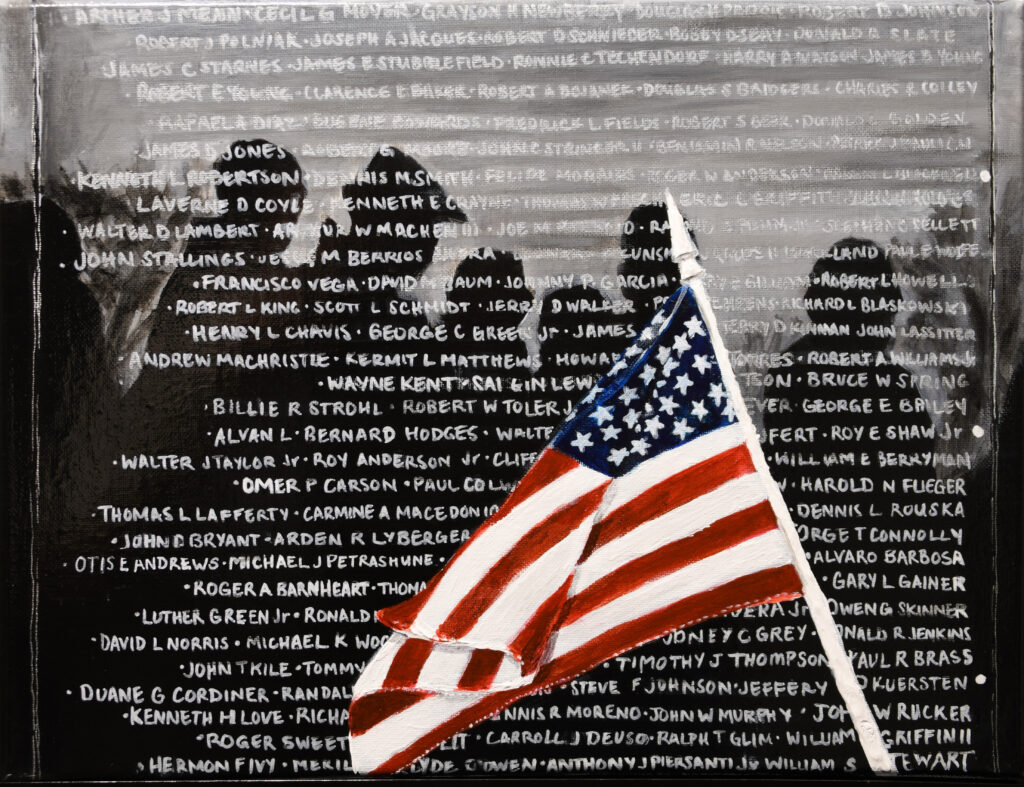
For Writers
Writers are brought in through outreach, referrals, and direct interest. If you’re interested, you’re welcome to reach out and share your work. We review writers based on their ability to engage with real stories thoughtfully and responsibly.
Writers are responsible for shaping a participant’s interview into a cohesive written work that remains true to the spirit and context of what was shared. The goal is to create a piece that stands on its own, while still honoring the original voice.
The interview is your foundation. You’re expected to remain faithful to its intent, tone, and meaning, but you are not required to present it verbatim. The work is interpretive, not a transcript.
Yes, within reason. You have the freedom to structure, shape, and refine the narrative, but not to alter the core truth of the story. The balance is between craft and integrity.
Yes. The participant will review the written piece before it is finalized. This allows for feedback and ensures the story remains aligned with their experience.
Writers are given a modest stipend, a copy of the printed book, and free entry into our fundraisers and exhibitions in the future.
The work is part of the Bullets and Bandaids collection and is intended for use within exhibitions, publications, and digital platforms. Any external use should be discussed and agreed upon in advance.
In most cases, writers work from the recorded interview. Though not always required, additional communication with the participant may be arranged if needed.
Timelines vary, but writers are typically given a clear timeframe at the start of the project. Communication is key if adjustments are needed.
The primary expectation is that the work remains true to the spirit of the participant’s story and does not intentionally promote harm or degrade groups of people. We also have a word count limitation of roughly 3,500 words, though that is negotiable. Beyond that, the approach and voice are yours.
Yes. Writers are credited in publications, exhibitions, and digital platforms alongside the artist and participant.
Yes. Many writers continue working with Bullets and Bandaids across multiple volumes and projects.
You’re not being asked to document a story. You’re being asked to carry it.
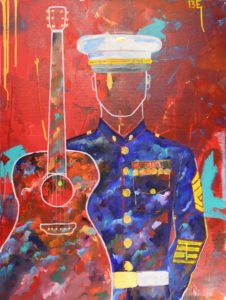
For Artists
Artists are invited through outreach, referrals, and direct interest. If you’re interested in participating, you’re welcome to reach out and share your work. We review artists on a rolling basis.
We work with a wide range of artists across disciplines—painting, sculpture, mixed media, digital work, and many more. There is no single style or medium we’re looking for. What matters is your ability to engage with a story in a meaningful way that can be conveyed through a strong voice.
No. Artists are free to work in their chosen medium. We intentionally seek a broad range of approaches to create a diverse and dynamic collection.
Stories are assigned. We make pairings based on what we believe will create the strongest connection between the story and the artist’s visual language.
You are given full creative freedom, though with the expectation that your work remains true to the spirit and context of the story, without undermining either or being derogatory toward a group of people. Beyond that, how you interpret it is entirely up to you.
The only real boundary is that the work should not intentionally degrade or promote harm toward other participants or groups of people. Beyond that, interpretation is open.
Most likely, yes. We may facilitate an introduction if it would be beneficial to the process, but it is not required.
Timelines vary, but artists are typically given a reasonable window to complete the work. Clear expectations are communicated at the start of each project.
Beyond a modest stipend for their participation, as well as shipping reimbursement, compensation varies. Though most of our artists choose to contribute their work as in-kind donations, in some cases, artists set their own price based on their work and experience while allowing us to retain ownership, continue touring, and actively look to have it sponsored.
Our artists retain the rights to their work, while Bullets and Bandaids retain the original work (in order to continue touring), as well as the license to reproduce it.
No. Bullets and Bandaids retains ownership of the artwork so it can continue to be exhibited and toured.
Rather than selling or auctioning the work, each piece is supported through sponsorship. Artists are compensated through that sponsorship, allowing the work to exist as part of a growing, traveling collection rather than as a commercial product.
Yes. Completed works become part of the Bullets and Bandaids collection and may be included in exhibitions, publications, and digital platforms.
Yes. Artists are always credited for their work in exhibitions, publications, and online platforms.
Though we are limited in space, we have had several artists return for multiple volumes or projects.